

Tsunami alert for US, Russia, Japan after massive 8.8 quake
Severe wave activity prompts warnings across Hawaii, Alaska, California and Asia-Pacific coasts
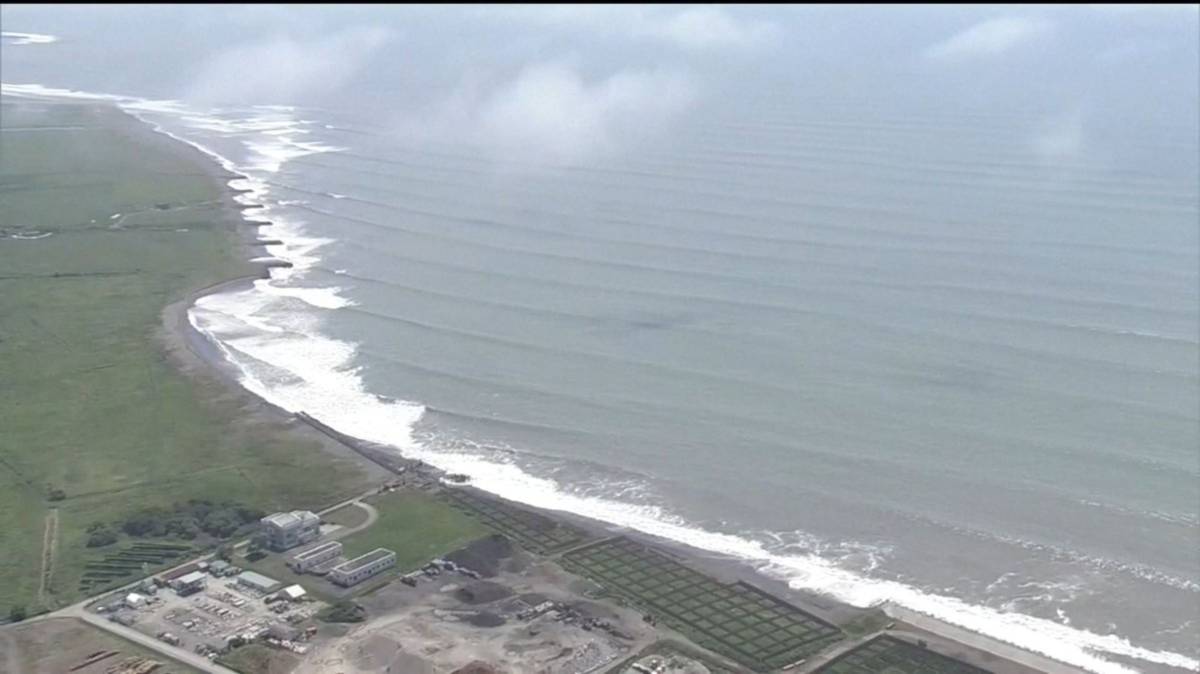
DUBAI: A powerful undersea earthquake measuring 8.8 magnitude has struck off the coast of Russia’s eastern Kamchatka Peninsula, setting off tsunami alerts across the Pacific Ocean.
The United States Geological Survey (USGS) reported that the quake hit 136km east of Petropavlovsk-Kamchatsky and 11km below the seabed.
The Pacific Tsunami Warning Center and weather agencies across affected regions have since issued advisories and warnings, stretching from Japan and Russia to the United States and South America.
Coastal gauges are now detecting tsunami waves in the E Aleutians & Pac side of Alaska Peninsula. Here are the latest obs from the Nat'l Tsunami Warning Center and coastal gauges. Red points show obs, blue points show forecast tides. The times in the graphs are in Zulu/UTC (1/2) pic.twitter.com/OPqD2bXgLt
— NWS Anchorage (@NWSAnchorage) July 30, 2025
Waves reach Russia, Japan
In Russia’s Severo-Kurilsk region, the fourth tsunami wave reached the coast on Tuesday, although it was significantly weaker than earlier ones. The third wave, according to local mayor Alexander Ovsyannikov, caused major damage to port infrastructure and small vessels. “The entire small fleet was pulled out to sea… some ships were washed ashore,” he told Interfax. Despite the destruction, there were no casualties reported. A state of emergency has been declared in the area.
In Japan, tsunami waves were recorded along nearly the entire Pacific coastline. NHK World reported wave heights of up to 1.3 metres in Kuji Port, with increases from 20cm to as much as 60cm across coastal towns. Authorities warned waves could reach up to 3 metres and urged residents in northern and eastern Japan, particularly in Hokkaido and Honshu, to evacuate low-lying areas.
Ferries have been suspended between Hokkaido and Aomori, as well as between Tokyo and nearby islands. Japanese nuclear power plants, including those in Fukushima, reported no operational anomalies, as confirmed by Tokyo Electric Power Company Holdings, according to the Associated Press.
Warnings across the Pacific
Hawaii has been placed on full tsunami alert, with waves reportedly reaching areas including Kahului, Nawiliwili, Pearl Harbor and Honolulu. Governor Josh Green held a press briefing urging the public to evacuate coastal zones. “We are not yet in the clear,” he stated, noting that while there was no major wave observed initially, water had receded significantly in Haleiwa. Data from Midway Atoll indicated wave heights of 1.8 metres, which could be larger by the time they hit Hawaii. Black Hawk helicopters and emergency vehicles have been deployed in preparation.
Tsunami waves are hitting Hawaii sudden water level rise seen in Kahului, Nawiliwili, Honolulu, and Pearl Harbor.#Tsunami #earthquakes #Hawaii pic.twitter.com/BEMO82ruC3
— Rebel_Warriors (@Rebel_Warriors) July 30, 2025
The US National Weather Service (NWS) confirmed tsunami waves were impacting Hawaiian coasts and emphasised the danger: “Each individual wave can last 5 to 15 minutes or more and extensively flood coastal areas. Debris and strong currents amplify the destructive power.” Joint Base Pearl Harbor-Hickam opened access roads to facilitate evacuations.
Alaska’s Aleutian Islands and parts of its mainland have also been placed under tsunami warning. Coastal gauges have detected waves on the East Aleutian Islands and Alaska Peninsula. The Pacific Tsunami Warning Center said waves could reach Alaska at approximately 4:46pm local time.
Broader Pacific impact
On the US mainland, tsunami watches were issued for California, Washington, and Oregon. Waves are forecast to reach Northern California by 11:40pm and Southern California roughly an hour later. Los Angeles was later upgraded to a tsunami advisory zone, and the National Weather Service urged residents to stay off beaches and away from harbours.

Evacuations were underway in Ecuador, where officials ordered preventive clearances of beaches and ports in the Galapagos Islands. According to Ecuador’s Secretariat for Risk Management, all maritime activities were suspended in the affected regions. Tsunami.gov listed numerous other countries that issued tsunami warnings, including Indonesia, the Philippines, Taiwan, New Zealand, and several Pacific island nations, as well as Central and South American states such as Chile, Mexico, and Costa Rica.
Meanwhile, tsunami sirens were activated across Tonga, with the country’s meteorological service warning of impacts on northern coasts like Niua and Vava’u by 10pm local time. Mariners were advised to move to deeper waters as part of evacuation precautions.
Volcanic activity adds to tension
Adding to concerns, Russia’s Klyuchevskoy volcano erupted shortly after the earthquake, sending ash clouds up to 3km high, according to the Kamchatka Volcanic Eruption Response Team (KVERT). The ash plume extended 58km east of the volcano, with warnings that emissions could reach 8km altitude, posing risks to aviation. The volcano has been assigned an orange aviation hazard level.
????‼️ RUSSIA'S KLYUCHEVSKOY VOLCANO ERUPTS AGAIN!
— Shadow Observer (@TheShadowObs) July 30, 2025
A fiery cone has formed inside the volcano's crater in Kamchatka after 200 earthquakes in just 24 hours, becoming the new center of volcanic activity.
The volcano is continuously spewing ash and "fire bombs," with warnings from… pic.twitter.com/31oP6g2wwG
This 8.8-magnitude tremor is one of the strongest in the Pacific in recent decades and follows a series of five smaller quakes in the Kamchatka region earlier this month. The largest of those measured 7.4 in magnitude. According to the Associated Press, this is the most significant seismic event since the 2011 earthquake and tsunami that devastated parts of Japan.